German manufacturer Börger GmbH develops and manufactures rotary lobe pumps, macerators and solid-liquid separators for demanding operating conditions. Each pump is selected and configured individually according to the pumped medium, required flow rate, pressure, temperature, solids content and installation conditions.
Börger equipment is used in industrial processes, wastewater treatment, biogas plants and agriculture to handle liquids, viscous media and fluids containing solids. FILTER specialists assess the operating conditions and support equipment selection, commissioning and spare parts supply.
Börger pumping, macerating and separation equipment is used in:
• Water and wastewater treatment
• Biogas and biomethane plants
• Agriculture
• Food processing
• Chemical and oil industries
• Waste management and recycling
• Mobile and emergency pumping systems
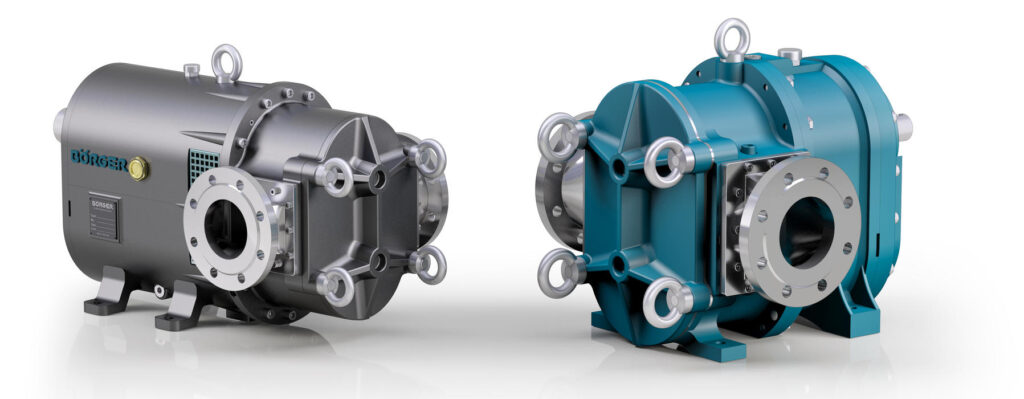
The product range includes BLUEline and ONIXline rotary lobe pumps, OrbitGrinder, Multicrusher and Rotorrake macerators, and Bioselect RC and Bioselect BS separators.
The appropriate equipment and configuration depend on the process and the material being handled.
Börger pumps and macerators
Börger rotary lobe pumps
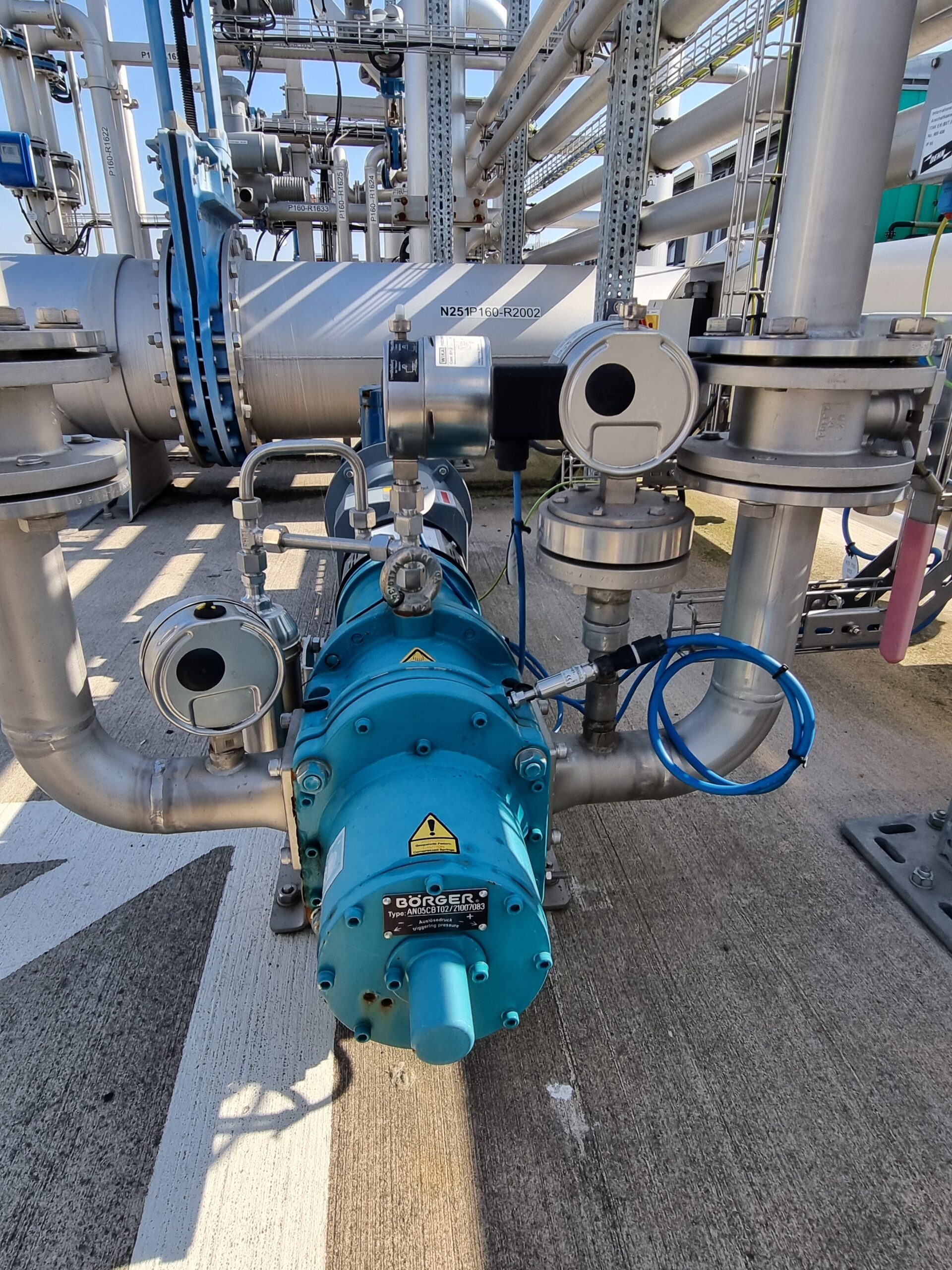
Börger rotary lobe pumps can be configured for clean liquids, viscous and abrasive media, and fluids containing solids. Rotor geometry, casing materials and seals are selected to suit the application.
Two synchronised rotors turn in opposite directions inside the pump chamber, carrying the medium from the suction side to the discharge side. These are positive displacement pumps, meaning that they displace a defined volume with each revolution. The flow rate can be adjusted through pump speed; actual performance depends on the medium and operating conditions.
Pump ranges
BLUEline Nova. The latest generation of BLUEline rotary lobe pumps for industrial, wastewater, agricultural and biogas applications. Nova clean is designed for non-abrasive media, while Nova tough includes casing protection for abrasive fluids containing solids.
BLUEline Legend. An established rotary lobe pump range for demanding media and continuous operation, with a wide choice of rotor geometries and materials.
ONIXline. A rotary lobe pump range for demanding media and higher operating pressures. The large seal chamber accommodates different mechanical seal systems selected for the application.
Key features:
• Self-priming capability
• Reversible pumping direction
• Options for viscous, abrasive and solids-laden media
• Low-pulsation flow with suitable rotor designs
• Compact construction
• A choice of rotor geometries, seals and materials
• Maintenance in Place (MIP), allowing wear parts to be replaced without dismantling the piping or drive
• Stationary, mobile and submerged configurations, with power take-off (PTO) drive options available
Börger macerators
Börger macerators reduce the size of solid and fibrous materials in a liquid stream before they reach pumps, pipelines or other process equipment. This can reduce the risk of blockages and protect downstream equipment.
Macerator ranges
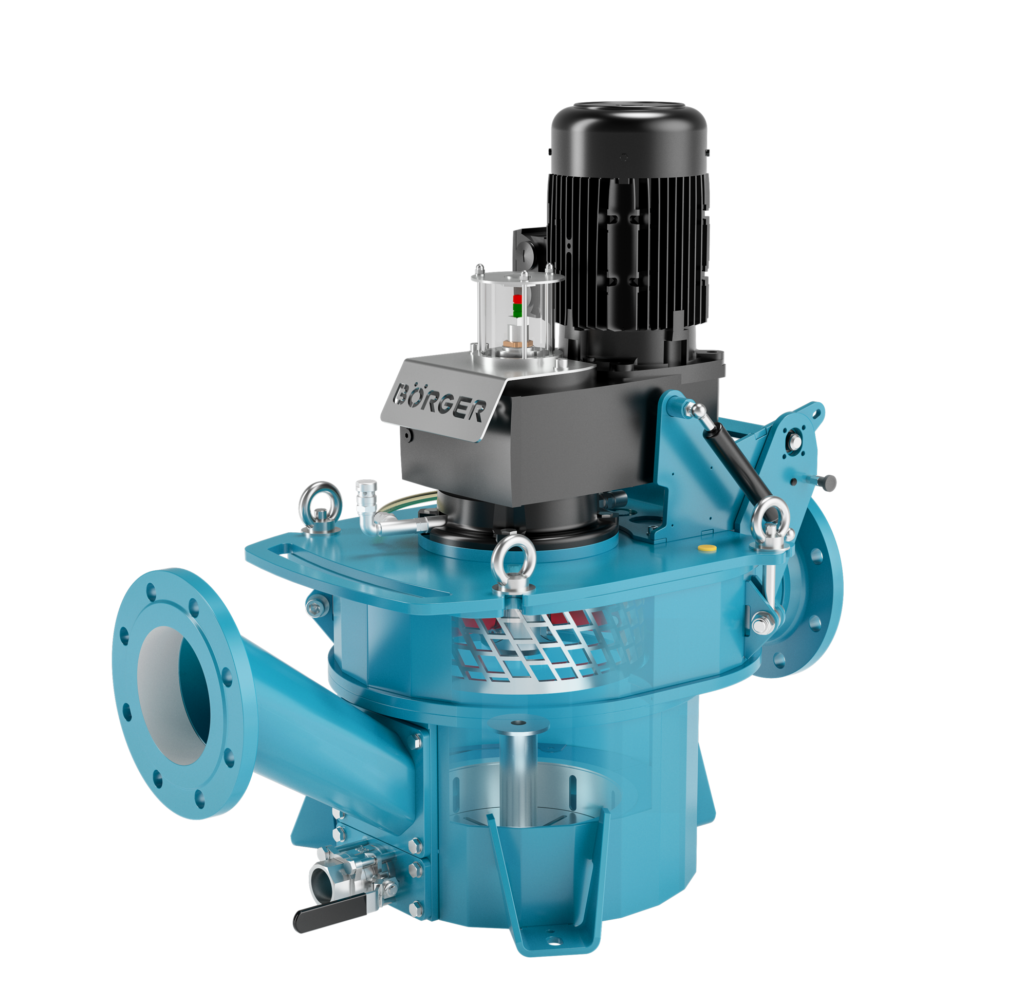
OrbitGrinder. A cutting basket macerator for solids and fibrous materials in liquid streams. Rotating blades cut the material as it passes through the basket, while a debris collector retains objects that cannot be shredded.
Multicrusher. A twin-shaft macerator for coarse, fibrous and difficult-to-shred materials. It can be installed in the pipeline upstream of a pump or other process equipment.
Rotorrake. A single-shaft macerator for coarse solids and rags. Versions with a debris collector retain objects that cannot be shredded, protecting downstream equipment.
Key features:
• Reduced risk of pump and pipeline blockages
• Size reduction of fibrous and coarse solids
• Reversing control options to respond to overloads or blockages
• Accessible, replaceable cutting components
• A choice of installation layouts and drive configurations
Börger Bioselect separators
Börger Bioselect separators separate liquid and solid fractions from digestate, liquid manure and other suitable media containing solids. Applications can also include sludge and organic process residues, subject to assessment of the feed material and separation requirements.
The liquid fraction passes through a wedge wire screen, while an auger conveys the solids towards the pressing or thickening section. The discharge arrangement and achievable dry solids content depend on the separator model, feed material and operating settings
Separator ranges:
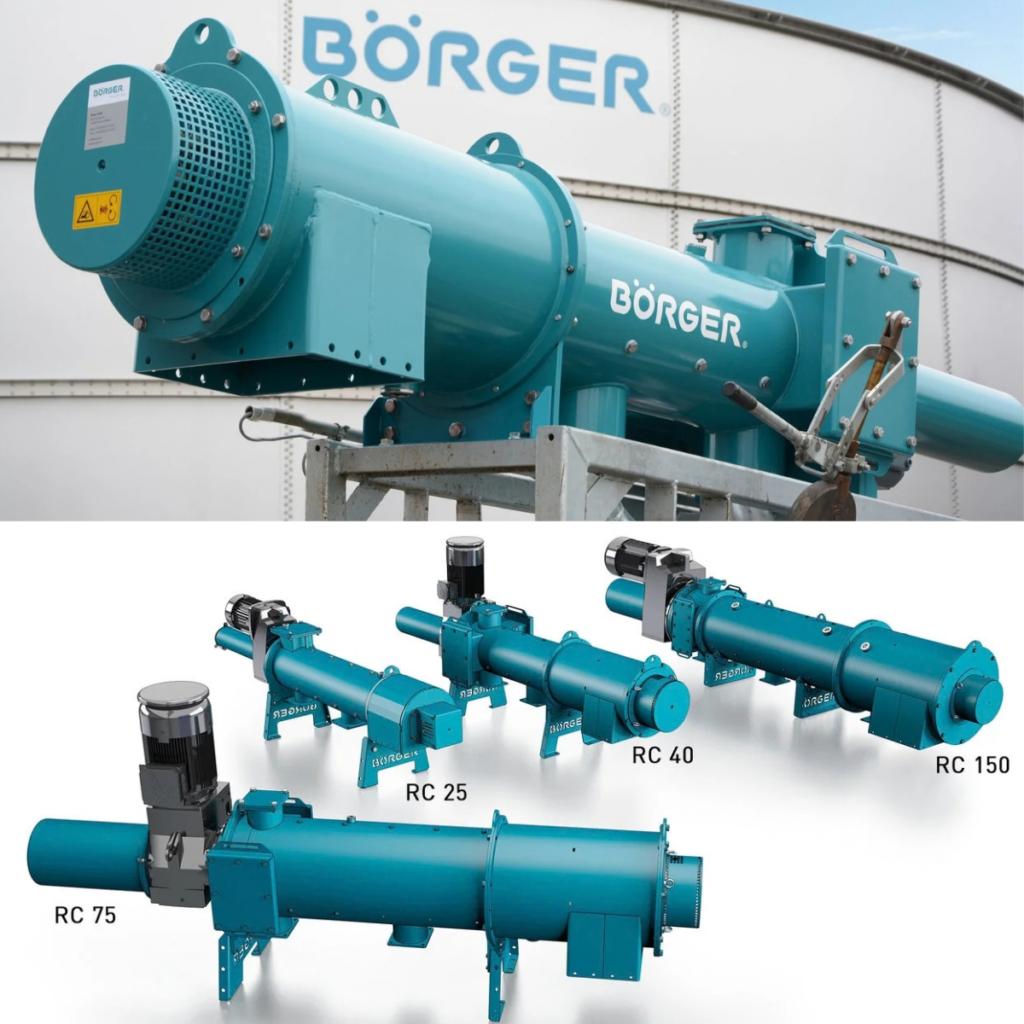
Bioselect RC. A screw press separator with a cylindrical wedge wire screen. The solids are dewatered in a press channel and discharged through the Multi Disc system. The dry solids content of the separated fraction can be adjusted.
Bioselect BS. A separator for thickening liquid manure and digestate in a closed system. The thickened fraction remains pumpable and is conveyed onwards by a rotary lobe pump. The degree of thickening is adjusted through pump control.
Operational benefits:
• Mechanical separation of liquid and solid fractions
• Adjustable dry solids content to suit subsequent handling
• Less liquid retained in the solids sent for transport or storage
• Potential return of the liquid fraction to the process
• Separate handling of the solid fraction for composting, fertiliser use or further processing, where suitable
• Automated operation options
• Maintenance at the installation site
Börger rotary lobe pumps are suitable for transferring clean liquids as well as viscous, abrasive and solids-laden media when configured for the application. They are used in wastewater treatment, biogas production, food processing, chemical processes, agriculture and waste management.
How do rotary lobe pumps differ from centrifugal pumps?
Rotary lobe pumps move a defined volume with each rotor revolution, while centrifugal pumps transfer energy to the liquid through a rotating impeller. Rotary lobe pumps are often selected for viscous or solids-laden media, self-priming duties and reversible flow. The appropriate pump type depends on the medium, required flow rate, pressure and system conditions.
How is the right Börger equipment selected?
Selection starts with the material to be handled and the required duty. Important parameters include viscosity, solids content and particle size, flow rate, pressure, temperature, operating schedule and available installation space. FILTER specialists assess these inputs to select a suitable pump, macerator or separator.
Want to learn more?Reach out to us, and we'll be glad to help you find a solution, product or service.