Water treatment for textile production must provide more than the required volume of water. It must also maintain stable parameters. Water quality matters for process stability, consistent product quality and reliable equipment operation.
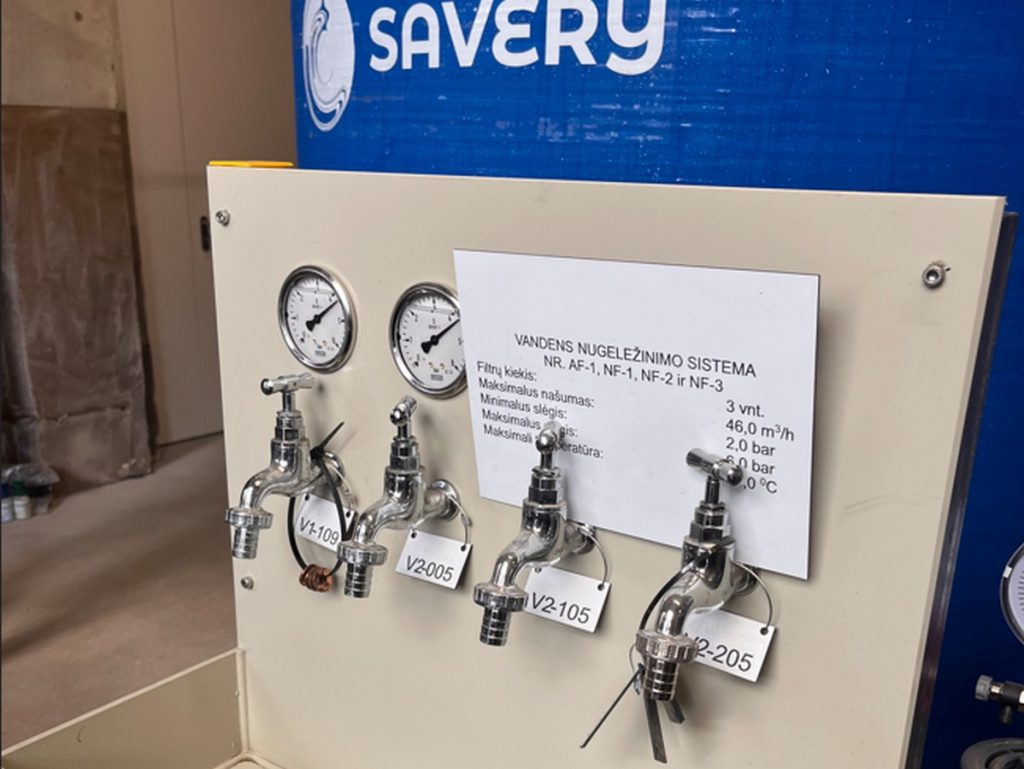
During the modernisation of the LINAS production facility in Panevėžys, Lithuania, FILTER implemented the complete water treatment solution—from incoming groundwater treatment to final process-water preparation. The system has a design flow rate of 46 m³/h.
An article published by JP.lt gives a wider look at the role of the new water treatment station in daily textile production. Below, we look more closely at the technical solution delivered by FILTER.
From groundwater to water suitable for production
Water enters the system from the facility’s groundwater well. Before it can be used in production, the water must undergo iron removal and softening and be adjusted to the required process parameters.
FILTER’s scope covered the complete solution, from incoming groundwater treatment to the preparation of process water with the required final parameters.
Several treatment stages in one system
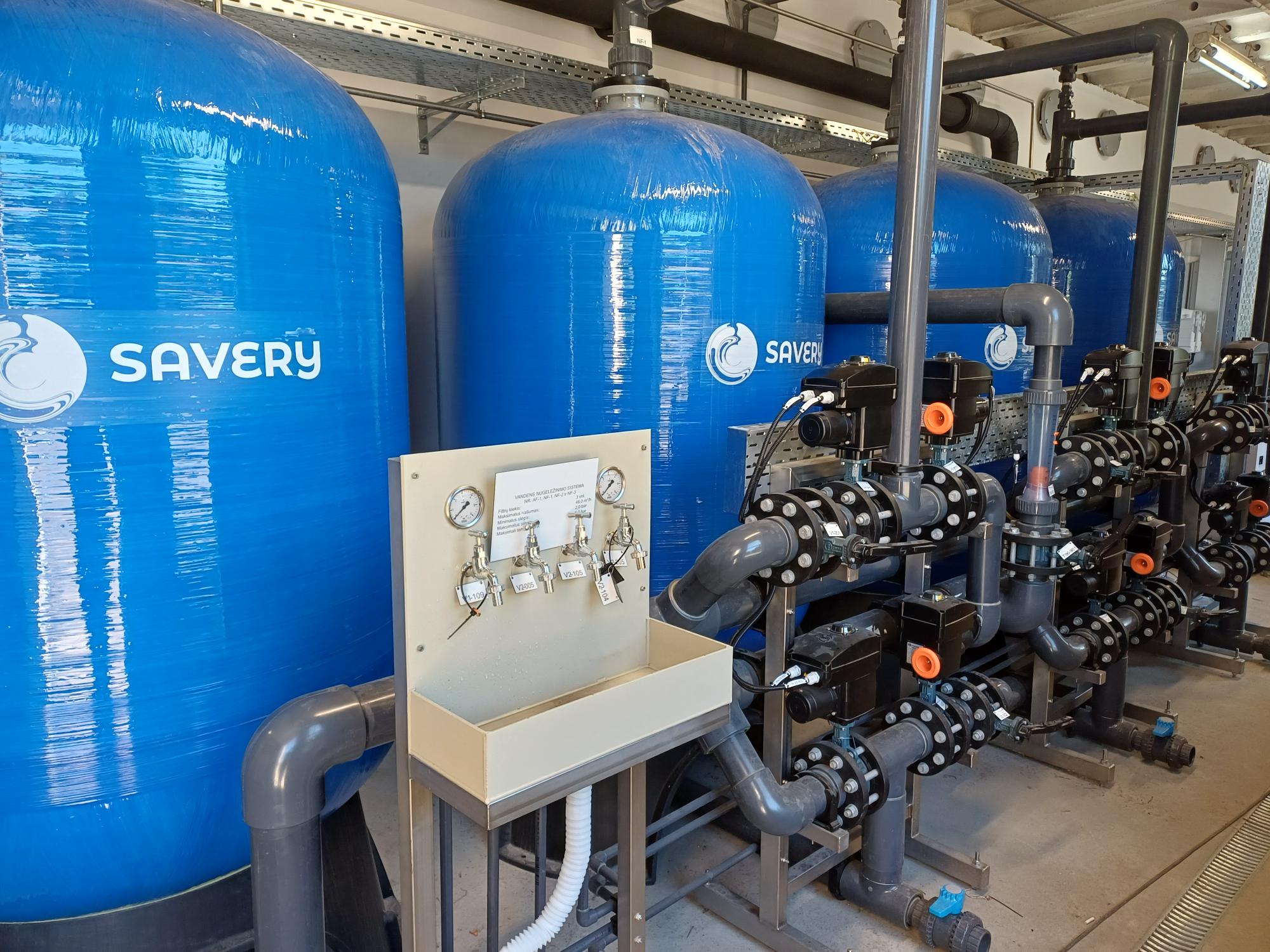
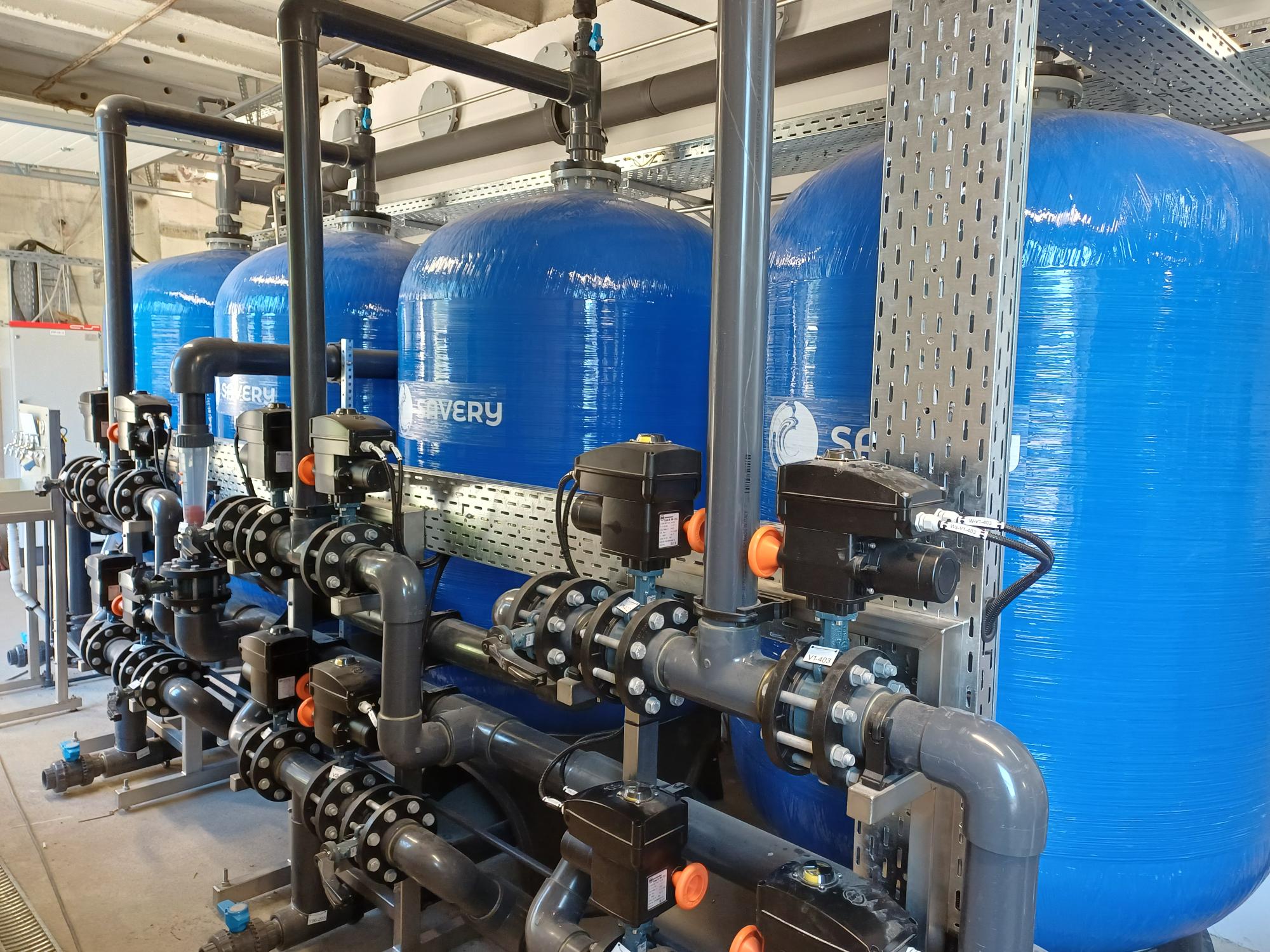
The system includes Savery water treatment equipment:
- groundwater iron-removal equipment;
- water-softening equipment;
- automated control valves;
- an automatic water-mixing system.
The task was not simply to soften the water as much as possible. The treated water had to meet the specific requirements of the textile production process.
The automatic mixing system adjusts the treated water to achieve a final hardness of 0.5–1.5 °dH. By combining several treatment stages in one system, the required water parameters are maintained before the water enters production.
Why controlled water hardness matters
Water forms part of the textile production process. Changes in water quality may therefore affect process stability, final product quality and the condition of production equipment.
Controlled hardness helps reduce the risk of scale forming in pipelines and process equipment. However, the lowest possible hardness is not always the correct objective in industrial water treatment. The water must match the requirements of the specific production process. For this project, the defined final hardness range is 0.5–1.5 °dH.
Automation provides better control
According to the JP.lt article, the new water treatment station operates automatically. Its parameters can be monitored and controlled through the supervisory control and data acquisition (SCADA) system and remotely. Responsible employees also receive automatic notifications of potential faults.
This gives the operating team a clearer view of the system’s status and supports a faster response to operational issues.
The result of cooperation between FILTER and Savery
The project combines FILTER’s project implementation and system-integration experience with Savery water treatment equipment.
Close cooperation with our manufacturing partner Savery helped turn the technical requirements into one working water treatment system—from incoming groundwater to the final parameters required by the production process.
Ultimately, investing in a robust water treatment system is a strategic decision that can yield substantial returns in terms of quality, efficiency, and sustainability. As the textile industry continues to evolve, organisations must remain proactive in adapting their water treatment strategies to meet emerging challenges and opportunities.
Key project data
- Application: process-water preparation for textile production
- Water source: the facility’s groundwater well
- Design flow rate: 46 m³/h
- Main processes: iron removal, softening and automatic mixing
- Final water hardness: 0.5–1.5 °dH
- FILTER scope: complete solution from groundwater treatment to final process-water preparation
Planning a water treatment system upgrade?
The right solution starts with the source-water analysis, required flow rate, consumption profile and the water-quality parameters required by the production process.
Contact FILTER to discuss your new or upgraded water treatment for textile production system. For an initial assessment, you can provide an available water analysis, the required capacity and the target process-water parameters.