The article was published by Geenius and Eesti Ekspress in the publication “The Future of Estonian Business 2026”.
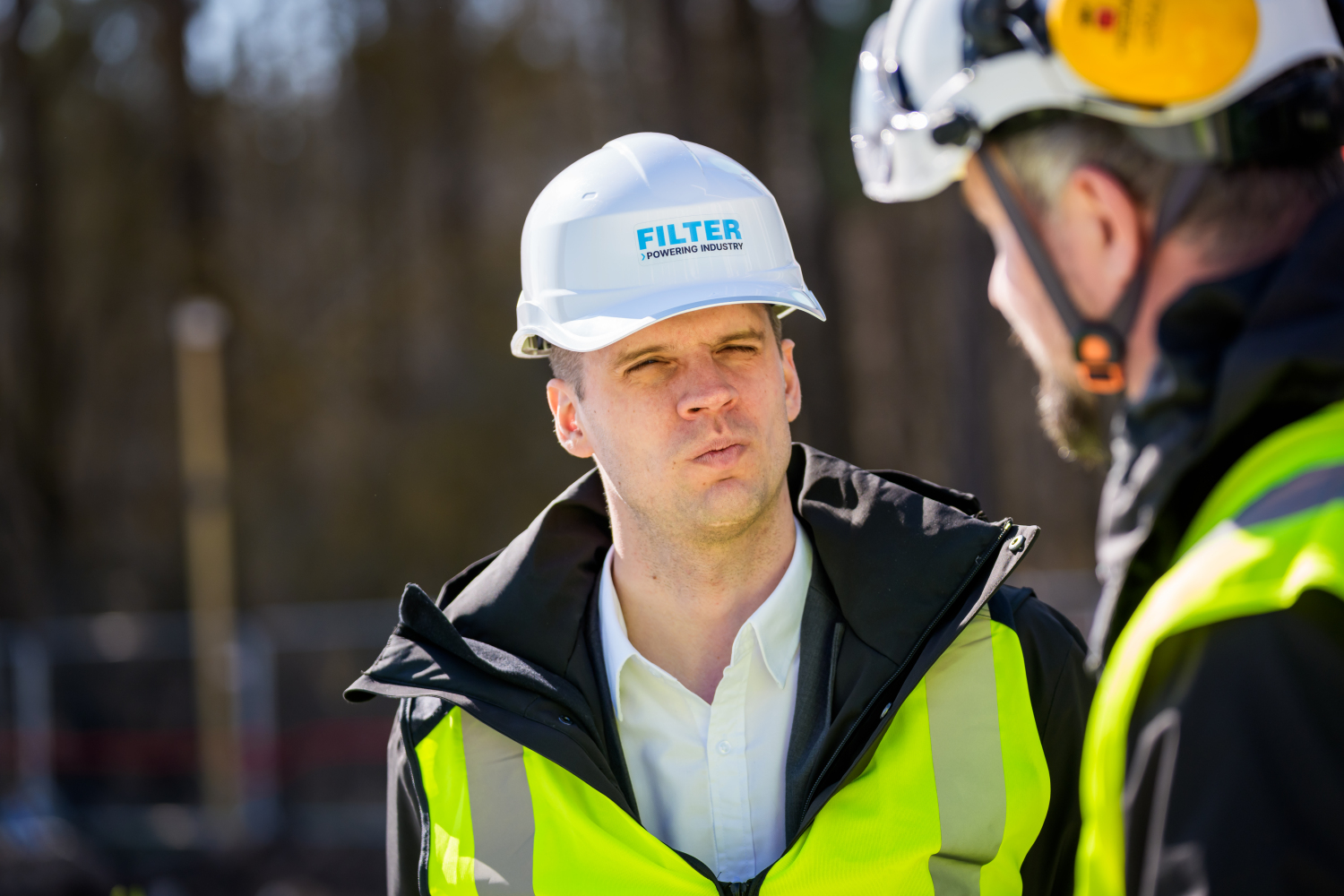
Estonian industry is currently at the crossroads of several major changes. Pressure from energy prices, the growing need for security of supply, the increasing share of renewable energy, and the rapid development of artificial intelligence are changing both the way production is organised and how investment decisions are made. According to Egert Killing, Member of the Management Board of FILTER and CEO of the Group, companies should not only look for new solutions but also take a critical look at what they already have, because valuable energy is often simply being wasted.
According to Killing, there is still plenty of work in the energy sector, although it is taking a somewhat different form than before. While traditional industry has become somewhat quieter, new systems and changes in the structure of energy generation are creating additional demand in the energy sector. A higher share of renewable energy, in turn, means that the power system needs greater flexibility and more rapidly dispatchable capacity.
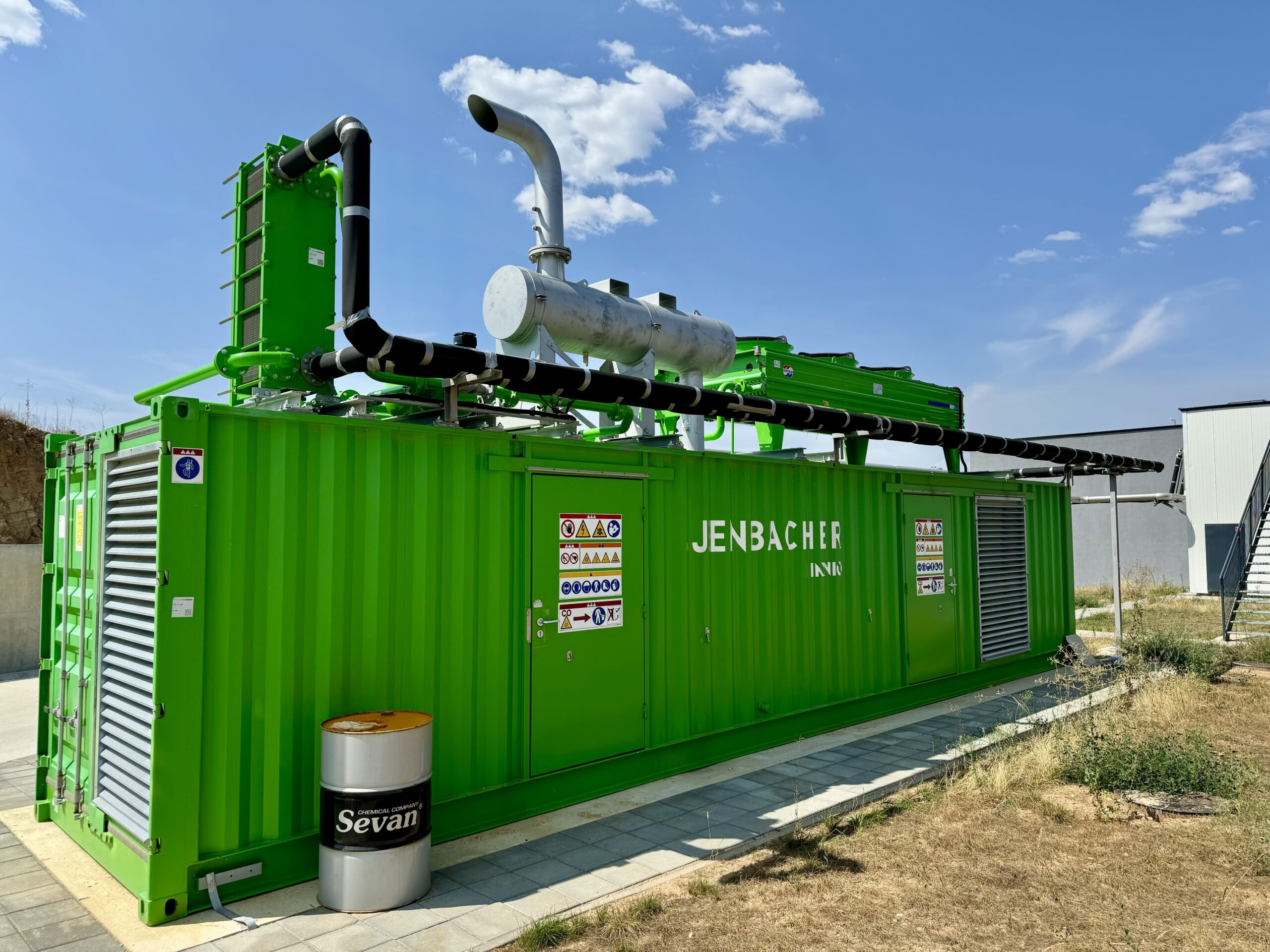
“Dispatchable capacity for upward and downward regulation is necessary following desynchronisation. With renewable energy, there is now a greater need for stabilisation – when the sun is not shining or solar panels are not generating electricity, we need to be able to replace that production with capacity that can be brought online quickly. These are gas engines, and their share is increasing.”
At the same time, changes in the energy market are forcing industrial companies to examine more thoroughly how they use their energy resources. The 2022 energy crisis, with its sharp rise in gas prices, brought energy costs firmly onto management agendas, but Killing believes that the issue of efficiency should not be limited to price alone. If the energy input is expensive or unstable, companies need to assess whether they are making maximum use of every unit of energy they consume.
“Since gas volumes in Europe are currently in a rather poor state, now is the time to start looking at how input energy is used, whether that is gas, oil or electricity. You need to ask whether you are really getting the maximum possible value from the amount of energy entering your factory.”
A new opportunity for older factories
Unlike many newly built production facilities, Estonia still has a large number of factories whose buildings and technical systems date back several decades. As a result, it is not always easy to obtain a complete overview of energy flows and processes.
“We have many industrial companies whose history goes back to the Soviet era and whose first buildings and mechanisms may be as much as 40–50 years old. In factories like these, we have carried out mapping exercises to understand, for example, where pipes installed at the time actually run and how the different systems are connected,” Killing explains.
Sometimes no one has precise knowledge of the old equipment, where pipelines begin or where they end. Yet these are precisely the places where significant efficiency potential may be hidden. An audit carried out by FILTER helps identify steam and heat losses and find opportunities to redirect otherwise unused energy back into the process.
Killing describes this as a kind of efficiency blindness: companies often tend to focus on what is easy to notice and what makes it easy for management to make an investment decision. Even in the context of the green transition, attention is usually given to visible measures, such as installing sensors and LED lighting, while invisible losses inside pipes and systems are overlooked, even though their impact can be much greater.
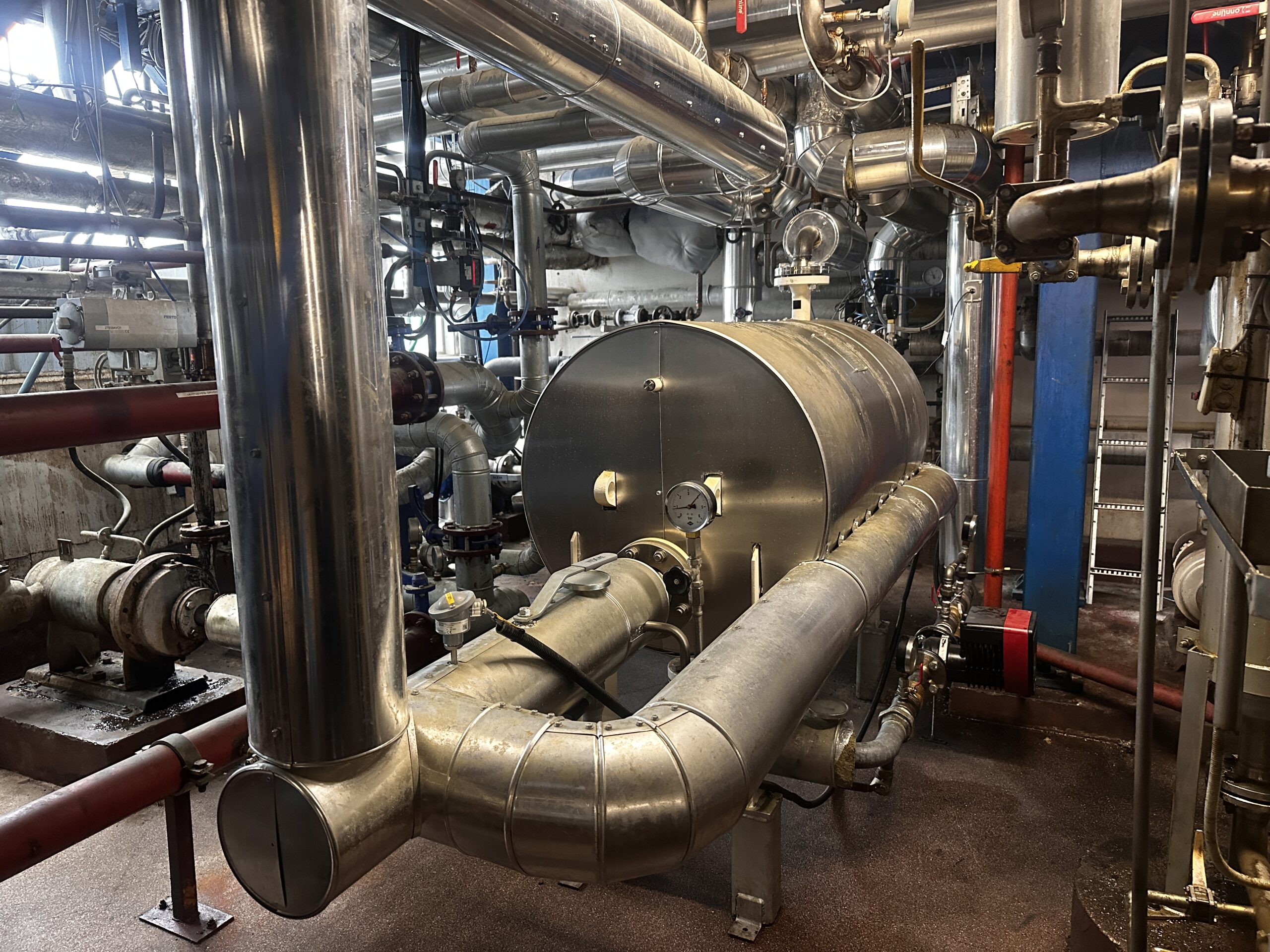
As an example, Killing refers to one of Estonia’s large food-processing companies, where a significant amount of gas energy was used to heat products while separate refrigeration units were used to cool the same products at the end of the process. Through engineering work, it was possible to connect the systems so that residual heat from the ovens was no longer released into the atmosphere but reused in the process. It required considerable thought and engineering work, yet at the same time it was a project based on straightforward common sense – how can industry waste less?
“This is exactly the kind of approach that matters in the current economic environment. On the one hand, companies want to increase sales, and on the other, they want to reduce costs, which often makes expanding production capacity the first thing that comes to mind. In reality, before constructing additional space or installing new equipment, companies should first examine whether their existing production can be made more efficient,” he explains.
“Shutting down a factory because of energy prices is not a solution. You need to look at the bigger picture and ask whether company management has a comprehensive overview of its processes. In the future, competitiveness may no longer come only from cheaper energy or labour, but increasingly from how intelligently a company uses the resources it already has.”
According to Killing, the adoption of automation and digital solutions can support this process, but here too it is important to look at the whole picture.
“It may happen that, at the same time, an industrial company is literally sending euros up the chimney through its production process. No AI or LED lamp will reduce a car’s fuel consumption, and the same logic applies to waste heat. I believe this is one of the largest untapped opportunities in Estonia, and the use of waste heat could become much more common in the coming years. In some projects, the investment can pay for itself within three to four years. This issue does not concern only large factories. Smaller production facilities may also have solutions with reasonable payback periods that can simultaneously reduce costs and environmental impact.”
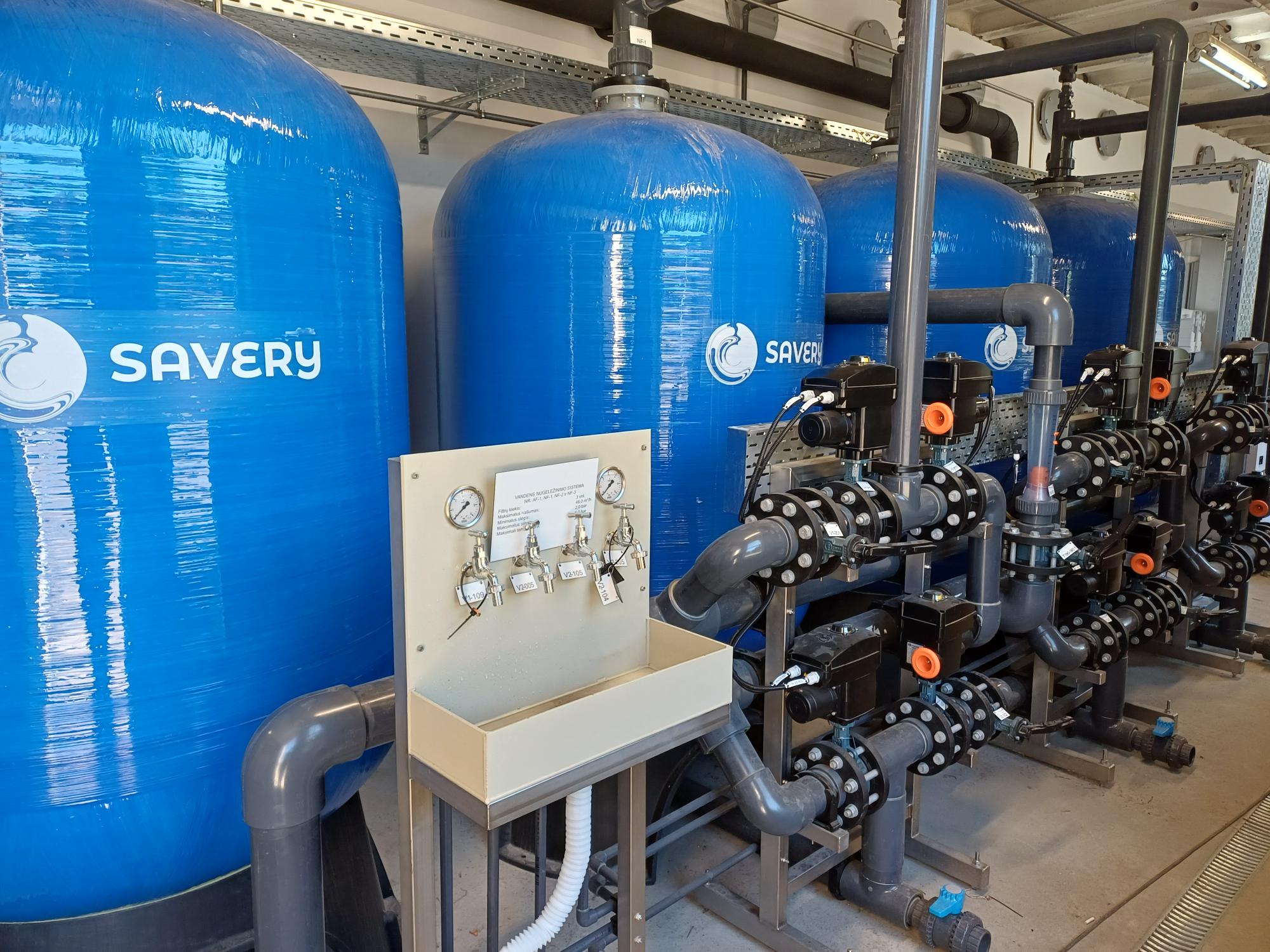
“Another equally significant resource is water,” Killing adds. “For example, clean groundwater may be used to cool autoclaves and then, once it has warmed up, discharged into the sewer. Instead, the heated water could be collected and later used in another process. This saves both water and energy at the same time, particularly considering that the price of water is also rising. There has been a great deal of waste in Estonia, and until now we have not experienced water-related problems very acutely, but these issues are now beginning to emerge.”
When selecting technologies, he recommends avoiding the idea that there is one universal solution for the future of industry. Wind, solar, hydrogen, heat pumps, electrode boilers and other technologies may all be necessary, but their suitability depends on the specific production process. Technology should be selected according to the customer and the company rather than simply following a trend.
He notes that the goal of FILTER’s engineers is certainly not to push fashionable equipment on anyone, but to find an integrated solution that helps use energy and other resources more efficiently, reduce costs and ensure reliable production.
Artificial intelligence has already changed the rules of the game in energy and industry
The development of AI has also had a strong impact on the market related to electrification, which has become more active and where, according to Killing, this is reflected in both prices and delivery times.
“In engineering, artificial intelligence can be useful, for example, for preliminary work, calculations and selecting supply options, but final responsibility must remain with a human. It is difficult to trust AI blindly in engineering. It is a very good tool, but AI will not take responsibility for safety or for whether a solution actually works in my production process. Production facilities are different, and there are few standard solutions. I would not dare let AI identify edible mushrooms, because if it makes a mistake, it will simply apologise. That is dangerous. So equipment should not be selected solely with the help of AI either.”
Instead, process-based thinking could become increasingly important for companies. Rather than purchasing an individual piece of equipment, the entire lifecycle of the solution should be considered, taking peak loads and actual demand into account and avoiding both over- and undersizing.
According to Killing, a good solution should begin with an audit and a payback calculation and extend through design, construction, commissioning and maintenance. At the same time, security of supply is also becoming increasingly important because the current state of the European energy system, geopolitical tensions and increasing electrification mean that companies should not depend on a single energy source.
“You cannot rely solely on wind, solar, oil, gas or wood. In our solutions, we use different technologies, including electrode boilers, heat pumps, storage and other solutions, to make energy generation more flexible and diverse,” Killing says.
“For industry, this means greater security of supply and less dependence on the price or availability of a single energy source. More efficient energy use also helps reduce costs and improve competitiveness.”
At the same time, he acknowledges that the ability of governments to support companies is limited.
“In our region, a large share of tax revenue goes towards national defence, and that is understandable. Small countries cannot support industries in enormous amounts and compensate for their costs. I see this as an opportunity for our industries, because how long can the German taxpayer continue paying for it? It makes sense to deal with our own problems ourselves, and to do it now, so that we are ultimately in a stronger position when the subsidies disappear. Industry cannot simply wait to see which technology or support measure enters the market next.”
For FILTER, these changes mean not only providing technical solutions but also supporting the next generation of specialists. The company participates in the activities of Rohetiiger (Green Tiger) and Enerhack and organises training to increase knowledge about energy use and the skills that will be needed in the future.
If a company can identify the energy, water and heat that it is currently leaving unused, a previously unnoticed competitive advantage may already exist within the factory.
FILTER
Field: Industrial energy and water treatment solutions, equipment and spare parts. FILTER delivers projects from audits and engineering through construction, automation, commissioning and maintenance.
Founded: FILTER is an international engineering company founded in Estonia in 1992 and also operates in Latvia, Lithuania, Finland, Bulgaria and Poland.
Employees: Filter Estonia: 70; FILTER Group: 200
Revenue: EUR 37.61 million in 2025
Biggest future opportunity: To become the preferred process technology partner for the industrial and energy sectors in all of FILTER’s home markets.
Biggest challenge: A shortage of experienced engineers and technical specialists, because creating complex industrial solutions requires expertise that cannot be acquired quickly or automated.
Impact of AI: In our sector, AI has created enormous demand for energy, turning the entire industry upside down. On the other hand, over the next five years AI will make engineering work faster by helping to analyse data, compare solutions and automate routine tasks. However, it will not replace engineers, because AI does not take responsibility for safety, equipment suitability or process stability.
Recommendation for entrepreneurs: Just as increasing revenue requires active sales work, reducing costs requires continuous optimisation. Energy bills should not be treated as inevitable – they can often be reduced significantly by measuring processes, identifying losses and using existing resources more intelligently.
Article link: https://geeniusdigipro.delfi.ee/artikkel/120605948/toostuse-jargmine-efektiivsushupe-voib-peituda-juba-olemasolevas-energias